What is ATS? The Complete 2026 Guide to Applicant Tracking Systems Every Job Seeker Must Read
You spend hours crafting the perfect resume. You tailor it to the job description, double-check your spelling, format everything neatly, and click submit. Then you wait. Days pass. No reply. No rejection email. Just silence.
This is one of the most frustrating experiences in any job search, and millions of people face it every single week. But here is the part that most job seekers never find out: the problem is often not your qualifications. It is not your experience. It is not even your resume design. The problem is that your resume never reached a human being in the first place.
The reason? An Applicant Tracking System, better known as ATS.
In 2026, ATS software is more dominant than ever. Almost every mid-size and large employer uses it. Many small businesses have adopted it too. If you are applying for jobs without understanding what ATS means, how it works, and what it does to your resume, you are competing at a serious disadvantage.
This guide will change that. By the time you finish reading, you will have a complete understanding of what ATS is, where the term comes from, why it exists, and most importantly, what you need to do so your resume actually gets seen.
ATS Full Form: What Does ATS Stand For?
Let us start with the basics. ATS stands for Applicant Tracking System.
The ATS full form in recruitment is exactly what it sounds like: a system that tracks applicants. It is a category of software designed to manage the entire hiring process, from the moment a candidate submits a resume to the point where a hiring decision is made.
The ATS abbreviation is widely used in HR departments, recruitment agencies, and career coaching circles. If you have ever wondered what ATS means when you see it on a job listing or career blog, now you know: it refers to the software system sitting between your resume and the recruiter reading it.
Other ways you might see the term used:
- ATS system (technically redundant, like saying "ATM machine," but widely understood)
- ATS software
- Applicant tracking platform
- Resume screening software
- Recruitment management system
All of these terms generally refer to the same category of tool. The core function is collecting, sorting, filtering, and organizing resumes and applications so that HR teams can manage large volumes of candidates efficiently.
Why ATS Exists: The Problem It Was Built to Solve
To understand ATS, you need to understand the hiring problem it was created to solve.
Before digital applications became the norm, hiring managers received resumes by mail or fax. The volume was manageable. A recruiter might receive 50 to 100 applications for a popular role and could realistically review each one.
Then came the internet. Online job boards like Monster and CareerBuilder launched in the mid-1990s, and suddenly anyone with internet access could apply for a job anywhere in the world with a single click. Application volumes exploded. A company that once received 80 resumes for a role might now receive 800 or even 8,000.
No human team could manually review thousands of resumes for every open position. Businesses needed a way to manage this volume, store applicant data, track where candidates were in the process, and filter out applicants who clearly did not meet the basic requirements.
ATS software was the answer. The first systems emerged in the early 1990s and were used primarily by large enterprises. By the 2000s, they had become standard across corporate hiring. By the 2010s, even small businesses could afford cloud-based ATS solutions. In 2026, ATS is essentially universal in any organization that hires regularly.
What is ATS? A Clear, Plain-Language Definition
Here is the simplest way to understand what an ATS is:
An Applicant Tracking System is software that companies use to receive, store, organize, and filter job applications before a human recruiter reviews them.
Think of it as a digital gatekeeper. When you apply for a job online, your resume does not go directly to a person. It first enters the ATS, which processes it automatically. The system reads your resume, extracts information from it, stores your data in a searchable database, and often scores or ranks your application based on how well it matches the job requirements.
Only after this automated process does a recruiter get involved, and even then, they are often looking at a filtered, ranked list rather than every single application.
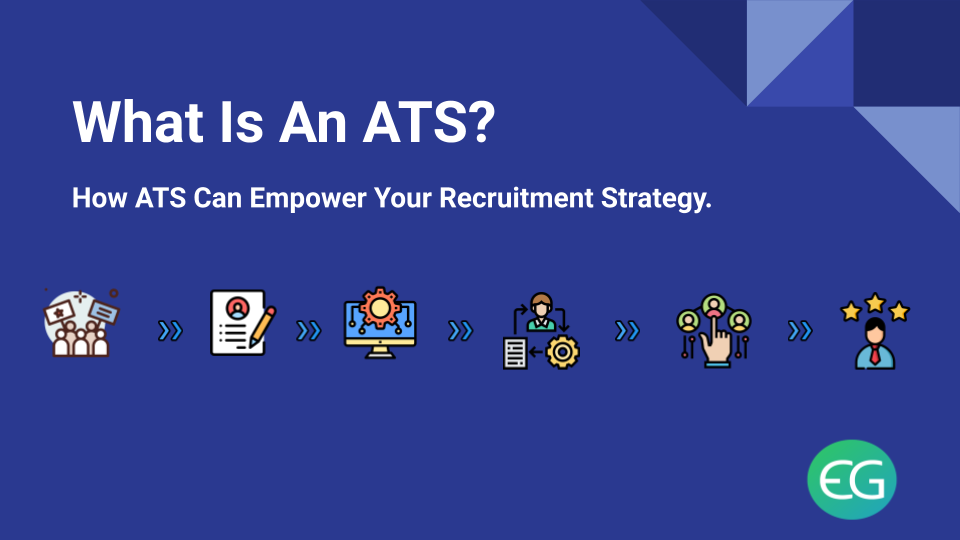
Here is a simple way to visualize the journey of your resume:
- You apply online
- Your resume enters the ATS
- The ATS parses and reads your resume
- Your application is scored or ranked
- Recruiters review the top-ranked applications
- Interviews are scheduled from that shortlist
If your resume scores poorly or cannot be read properly by the ATS, it never makes it to step five. You are filtered out before a human being ever sees your name.
ATS Meaning in Different Contexts
The term ATS is used across several industries and contexts. Here is a quick breakdown of what ATS means in different settings:
ATS meaning in recruitment: In HR and recruitment, ATS refers specifically to the applicant tracking software used to manage job applications. This is the most common use of the term.
ATS meaning in resume writing: When resume writers and career coaches talk about ATS, they are referring to the formatting, keyword, and structural requirements that make a resume readable and high-scoring within these systems. An ATS-friendly resume is one designed to perform well inside this software.
ATS abbreviation in other industries: In other industries, ATS can stand for different things. In aviation, ATS means Air Traffic Service. In finance, it can refer to Automated Trading System. In automotive, it is sometimes used for Automatic Transmission System. But in the context of jobs, careers, and resumes, ATS always means Applicant Tracking System.
How ATS Software Actually Works
Understanding what ATS is at a conceptual level is useful. But understanding how it actually processes your resume is what gives you the practical edge.
Step 1: Resume Parsing
When you submit your resume, the ATS first attempts to parse it. Parsing means the system reads through your document and extracts structured information from it. It identifies sections like:
- Contact information (name, email, phone, location)
- Work experience (job titles, company names, dates)
- Education (degrees, institutions, graduation years)
- Skills (both hard skills like software and soft skills like leadership)
- Certifications and credentials
- Summary or objective statements
This sounds straightforward, but it is where many resumes run into trouble. If your resume uses unusual formatting, text boxes, columns, graphics, or uncommon fonts, the parser can misread or skip sections entirely. A resume that looks beautiful to a human might be a jumbled mess of mismatched data to an ATS.
Step 2: Data Storage and Indexing
Once your resume is parsed, the extracted data is stored in the ATS database. Your profile becomes searchable. Recruiters can filter and search this database using keywords, job titles, years of experience, education level, location, and other criteria.
This is why keywords matter so much. If the job description mentions "project management" and your resume says "managing projects," the ATS might not match them depending on how sophisticated the system is.
Step 3: Scoring and Ranking
Most modern ATS platforms do more than store data. They actively score and rank applications. Scoring algorithms vary between systems, but they generally consider:
- Keyword match rate: How many of the job description's key terms appear in your resume
- Section completeness: Whether your resume has all expected sections
- Experience relevance: Whether your job titles and experience align with the role
- Education match: Whether your qualifications meet the listed requirements
- Recency: How recently you held relevant roles
Some systems assign a numerical score. Others rank applicants in order. Some flag certain candidates as strong matches while deprioritizing others.
Step 4: Recruiter Review
With thousands of applications filtered and ranked, a recruiter now reviews the top results. They may only look at the top 10 or 20 percent of applications. If your resume was parsed incorrectly, flagged for missing keywords, or ranked poorly, it will not appear in this shortlist.
What ATS Is Not: Clearing Up Common Misconceptions
There are a lot of myths about ATS floating around online. Let us clear up the most common ones.
Myth 1: ATS automatically rejects resumes Not exactly. Most ATS platforms do not auto-reject. They rank and filter. But the practical effect is the same: if you rank in the bottom half, a recruiter will likely never open your file.
Myth 2: ATS only looks at keywords Keywords matter a lot, but modern ATS platforms also consider formatting quality, section structure, job title relevance, experience timeline, and more. Simply stuffing keywords into your resume is not enough and can actually look suspicious to human reviewers.
Myth 3: A designed resume always fails ATS Good design does not have to hurt your ATS score. The issue is specific design choices: text in images, unusual fonts, decorative columns, or headers in graphics. A well-designed resume that uses clean, simple formatting can score highly and still look impressive. This is exactly the approach taken by the professional resume designers at DraftaCV, who create resumes that are visually polished and fully ATS-compatible.
Myth 4: Small companies do not use ATS Many small and medium businesses now use lightweight, affordable ATS tools. Even some individual recruiters use basic ATS features built into LinkedIn or email platforms.
Myth 5: Once you beat the ATS, you are done Passing the ATS filter gets your resume in front of a human. But the human then makes their own judgment. Your resume needs to impress both the system and the person. These are two different challenges.
Popular ATS Platforms Used by Employers in 2026
If you want to understand what you are up against, it helps to know which specific ATS systems are commonly used. The most widely used platforms include:
- Workday — Used by large enterprises across finance, tech, and healthcare
- Greenhouse — Popular with technology companies and startups
- Lever — Common in mid-size tech and creative businesses
- iCIMS — Widely used in corporate and enterprise environments
- Taleo (Oracle) — One of the oldest and most common systems in large corporations
- BambooHR — Common in small to mid-size businesses
- Jobvite — Used across multiple industries
- SmartRecruiters — Growing platform used across sectors
Each of these systems has slightly different parsing behavior and ranking logic. This is one reason why no single resume template works perfectly for every application. The safest approach is to build a resume that follows universal ATS best practices rather than optimizing for one specific system.
Why ATS Matters More Than Ever in 2026
The importance of ATS compatibility has grown significantly in recent years, and there are several reasons for this:
More online applications than ever Remote work and hybrid hiring have made it even easier for candidates across the world to apply for the same roles. Application volumes have grown, which means employers are leaning even harder on automated filtering.
AI-enhanced screening Modern ATS platforms now incorporate machine learning and AI features that go beyond simple keyword matching. These systems can assess resume quality, flag unusual patterns, and make increasingly sophisticated judgments about candidate fit.
Longer hiring cycles In 2025 and into 2026, many companies are taking longer to make hiring decisions. This means applications sit in the ATS database for longer, and the quality of your resume data matters over a longer window.
Skills-based hiring on the rise More employers are moving toward skills-based hiring, which means ATS systems are being configured to search for specific demonstrated skills rather than just job titles or degrees. This changes how resumes need to be written and structured.
What "ATS-Optimized" Actually Means
You will often see the phrase "ATS-optimized resume" on career websites and resume writing services. But what does this actually mean in practice?
An ATS-optimized resume is one that has been specifically designed and written to:
- Be parseable — The document format and structure allow the ATS to correctly extract your information
- Score highly on keyword matching — The resume naturally incorporates the specific terms and phrases from target job descriptions
- Follow expected section conventions — Using standard section headings like "Work Experience," "Education," and "Skills" rather than creative alternatives the ATS might not recognize
- Avoid problematic formatting elements — No text boxes, columns, graphics-based headers, tables used for layout, or embedded images containing text
- Be saved in the right format — Typically PDF or .docx, depending on what the employer specifies
At DraftaCV, every resume produced across all package tiers, from the Basic Starter to the Executive Elite, is built on these principles. The goal is always a resume that performs well in the system and reads well to a human.
The Real Cost of Ignoring ATS
Let us put some numbers behind this. Research and industry surveys have consistently shown:
- Over 75 percent of resumes submitted to large employers are filtered by ATS before a recruiter sees them
- The average corporate job posting attracts 250 or more applications
- Recruiters spend an average of 6 to 7 seconds on each resume they do review
- Formatting errors account for a significant proportion of ATS failures, even among well-qualified candidates
This means that a highly qualified candidate with a poorly formatted or keyword-thin resume can lose to a less qualified candidate whose resume is properly optimized. The system is not perfect. It rewards preparation and knowledge.
The good news is that once you understand how ATS works, fixing your resume is entirely within your control.
How to Check If Your Resume Is ATS-Friendly
Before you apply for your next role, you should know how your current resume performs against ATS standards. There are several ways to do this:
Manual check: Review your resume for the most common ATS failure points: text boxes, columns, graphics containing text, headers and footers with important information, unusual fonts, and overly designed layouts. If your resume was built in a tool like Canva, it may look great but parse poorly.
Keyword comparison: Copy the job description text and compare it to your resume. Are the key skills, tools, and phrases mentioned in the job listing also present in your resume? If not, you have keyword gaps.
Free ATS Scanner: The fastest and most accurate way to test your resume is to use a dedicated tool. DraftaCV's free ATS checker analyzes your uploaded resume in real time and gives you an ATS compatibility score along with specific recommendations. It takes under a minute and shows you exactly where your resume is falling short.
ATS and the Human Element: Striking the Balance
Here is something important that often gets lost in ATS-focused conversations: your resume still needs to impress a person.
Once you pass the ATS filter, a human recruiter will read your resume, probably in about six seconds on first pass. In that time, they will form an impression. They will notice whether it is clear, clean, and easy to scan. They will look at your most recent role and your career trajectory. They will notice whether the language feels authentic or generic.
This means you cannot optimize purely for the machine. A resume stuffed with keywords but written in robotic, lifeless language will pass the ATS and immediately lose the recruiter. You need both: a resume that the system can read easily and a human can be impressed by.
This balance is something that professional resume writers understand well. It is not just about formatting. It is about writing that communicates real value, tells a compelling career story, and uses language that feels natural while strategically including the right keywords.
What to Do Next: Your ATS Action Plan
Now that you understand what ATS is, what the term stands for, and how the system works, here is a simple action plan:
Step 1: Test your current resume Use the free ATS checker at DraftaCV to get an instant score and see where your current resume stands.
Step 2: Review your formatting Remove any elements that are known to cause parsing issues. This includes text boxes, columns, tables used for layout, and images containing text.
Step 3: Align your keywords For each job you apply to, read the description carefully and ensure your resume reflects the same language and terminology where it is honest and accurate to your experience.
Step 4: Use standard section headings Make sure your sections are labelled in ways the ATS expects: Work Experience, Education, Skills, Certifications. Avoid creative titles like "My Journey" or "What I Bring."
Step 5: Consider professional help If you are not confident in your ability to balance ATS optimization with strong human-readable writing, a professional resume writing service can make a significant difference. DraftaCV's packages start at an accessible price point and include full ATS optimization as standard.
Key Takeaways
- ATS stands for Applicant Tracking System, software used by employers to manage, filter, and rank job applications
- The full form of ATS in recruitment is Applicant Tracking System, though the abbreviation is widely understood across the industry
- ATS software was created to solve the problem of high application volumes in the digital hiring era
- Your resume goes through automated parsing, scoring, and ranking before a human ever sees it
- Common ATS failure points include poor formatting, missing keywords, and non-standard section headings
- In 2026, ATS is nearly universal across employers of all sizes
- You need a resume that passes the ATS filter AND impresses a human recruiter
- You can test your resume for free using DraftaCV's ATS checker
Understanding ATS is the first step. Now it is time to act on that knowledge. Whether you optimize your resume yourself or work with a professional team, make sure your resume is built to survive the filter, because all the experience in the world means nothing if it never gets read.
Ready to find out how your resume scores? Try the free ATS resume checker at DraftaCV and get your results in under 60 seconds. Or explore our professional resume writing packages and let our team craft a resume that works for both the system and the recruiter.